

Cirugía de párpados Antes y Después
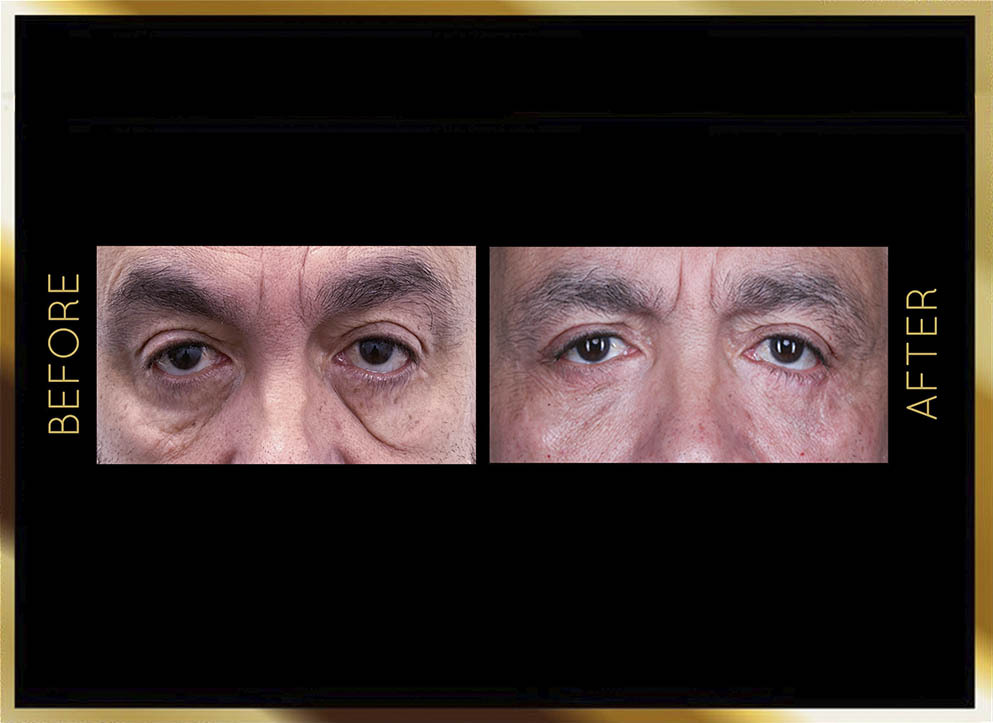
*Los resultados pueden variar.

Es un placer trabajar con él y siempre ofrece un servicio excepcional.
Qué es la blefaroplastia?
La blefaroplastia, comúnmente conocida como cirugía de párpados, es un procedimiento cosmético o reconstructivo para mejorar los párpados caídos y eliminar el exceso de piel alrededor de los ojos. También aborda los problemas funcionales causados por la flacidez del tejido de los párpados.
Durante el procedimiento, se extrae o se reposiciona la piel sobrante, el músculo adherido y, en ocasiones, la grasa de los párpados para levantar y rejuvenecer la zona de los ojos. Esto ayuda a que los ojos parezcan más descansados y, en algunos casos, mejora la visión afectada por el exceso de piel en los párpados superiores.
Esta cirugía se puede realizar en los párpados superiores, inferiores o en ambos, dependiendo de las necesidades y los objetivos estéticos del paciente. La blefaroplastia de párpados superiores elimina el exceso de piel o grasa de los párpados superiores, mientras que la blefaroplastia de párpados inferiores se centra en la hinchazón, las bolsas o la flacidez debajo de los ojos.
La blefaroplastia es una forma ideal de abrir los ojos y lograr una apariencia juvenil, fresca y enérgica. El Dr. David Shokrian evalúa la alineación de las cejas, la piel de los párpados, el tono muscular y la forma de los ojos, y desarrolla un plan de tratamiento personalizado que ofrece resultados naturales.
¡Borra los años de tus ojos con la blefaroplastia!
Testimonios de clientes
Este lugar era muy bueno. La amabilidad y servicialidad del personal era impresionante. Me encantó Jess y mis masajes de Maribel... ella era tan buena que quería una botella de leche de 8 onzas y mi cama después. En general el Dr. Shokrian fue muy honesto en lo que podía hacer y lo que no, lo que hizo mi elección aún más fácil.
Testimonios de clientes
Sophia me ayudó enormemente, si no fuera por ella, probablemente nunca habría seguido adelante con mi cirugía. Me hizo sentir tan cómoda y como si realmente se preocupara por mí. Me encantan mis resultados hasta ahora y el Dr. Shokrian es INCREIBLE con su trabajo. Por fin puedo decir que estoy feliz y segura de mí misma. Gracias a todos, pero especialmente a SOPHIA.
Testimonios de clientes
Si está buscando un lugar de confianza para un nuevo comienzo para verse bien y sentirse cómodo en su piel. ¡Millennial cirugía plástica es el lugar! Estoy muy contenta con mis resultados. ¡El personal es muy profesional y te ayudan a lo largo de su viaje, especialmente Barbara! Su oficina del centro es super limpia y bonita. El Dr. Shokrian es un genio absoluto y te hará lucir bien. Recomiendo encarecidamente esta clínica y sin duda volveré.
¿Qué causa los párpados caídos?
La caída de los párpados superiores, conocida médicamente como blefaroptosis, se produce cuando el párpado superior desciende por debajo de su posición normal sobre el ojo. Esta afección puede afectar a uno o ambos ojos.
Algunas personas nacen con esta afección, mientras que otras pueden desarrollarla más adelante en la vida.
La ptosis adquirida puede deberse a diversos factores, entre los que se incluyen:
- Envejecimiento o envejecimiento prematuro
- Debilidad o desprendimiento de los músculos que levantan los párpados.
- Frotamiento crónico de los ojos
- Problemas relacionados con los nervios
- Lesión o traumatismo
- Cirugía ocular previa
A medida que los músculos pierden su capacidad para levantar el párpado, se produce una caída constante, lo que puede interferir en la visión, causar fatiga ocular o provocar dolores de cabeza por la elevación constante de las cejas.
¡Estamos deseando conocerle! Ofrecemos consultas exhaustivas con el Dr. Shokrian, y su equipo tanto virtualmente como en persona.
212-421-7123Enfoques específicos: tipos de blefaroplastia que ofrecemos
Dado que la anatomía periorbitaria varía considerablemente de un paciente a otro, su plan quirúrgico se adapta totalmente a sus necesidades.
En función de sus objetivos estéticos y sus necesidades médicas, el Dr. Shokrian podría recomendarle:
- Cirugía de párpados superiores: Se centra en extirpar la piel pesada y caída, así como los depósitos de grasa localizados, de los párpados superiores. La incisión se oculta estratégicamente dentro del pliegue natural del ojo, lo que hace que
- Cirugía de párpados inferiores: Se centra en las bolsas de grasa estructurales que provocan «bolsas» y hinchazón permanentes debajo de los ojos. La incisión se realiza normalmente justo debajo de la línea de las pestañas o en el interior del
- Blefaroplastia bilateral (combinada): se realiza en los párpados superiores e inferiores en una sola sesión integral. Esta intervención dura aproximadamente entre dos y tres horas y proporciona un rejuvenecimiento completo de la zona ocular.
- Tienes exceso de piel en los párpados superiores, lo que te da un aspecto pesado o encapuchado.
- Experimentas obstrucción visual debido a la piel caída.
- Te sientes incómodo con el grado de caída del párpado superior.
- Tienes demasiados depósitos de grasa alrededor de ambos ojos.
- Tienes hinchazón o bolsas debajo de los ojos que no mejoran con el descanso.
- Sientes que tus ojos te hacen parecer cansado, triste o más viejo de lo que eres o te sientes.
- Goza de buena salud en general y no padece ninguna afección médica que afecte a la cicatrización.
- Tiene expectativas prácticas y realistas sobre lo que puede lograr la cirugía de párpados.
- Elimina el exceso de piel y la grasa herniada de los párpados.
- Reafirma el contorno de los párpados conservando el pliegue y la forma naturales.
- Crea un perfil más luminoso y abierto sin alterar tu aspecto natural.
- Mejora el atractivo general del rostro.
- No cambia tus expresiones faciales.
- Proporciona los efectos deseados en un solo tratamiento.
- Caída de las cejas, que puede requerir un lifting de cejas.
- Decoloración bajo los ojos
- Patas de gallo en las comisuras de los ojos
- Estructura del párpado y calidad de la piel
- Posición de las cejas
- Fuerza muscular
- Grado de exceso de piel o grasa
- Salud ocular general
- Historial médico
- Grado de obstrucción de la visión: si es motivo de preocupación.
- Orientación detallada pre y posoperatoria sobre cómo prepararse para la cirugía y qué esperar durante la recuperación.
- Ptosis (párpados caídos): Debilidad de los músculos elevadores o exceso de piel que cuelga sobre el párpado superior, lo que obstaculiza la visión.
- Depósitos de grasa periorbitales: bolsas debajo de los ojos persistentes que no desaparecen con el sueño, la dieta ni los tratamientos tópicos.
- Ectropión y entropión: afecciones estructurales en las que el párpado inferior se gira hacia fuera (lo que expone al ojo a una sequedad e irritación graves) o hacia dentro (lo que hace que las pestañas rocen con fuerza la córnea).
- Lagofthalmos: incapacidad funcional para cerrar completamente los párpados, lo que deja al ojo expuesto a daños crónicos.
- Asimetría facial: pliegues o formas desiguales de los párpados debidos a factores genéticos, problemas nerviosos o traumatismos previos.
Las cicatrices son prácticamente imperceptibles una vez curadas. Esta intervención, de entre 45 y 60 minutos de duración, es muy eficaz para despejar la visión periférica obstruida.
párpado inferior (vía transconjuntival) para extraer o redistribuir la grasa de forma imperceptible.
Soy un buen candidato para la cirugía de párpados?
Su deseo de corregir un rasgo poco atractivo o una obstrucción es uno de los factores más importantes a la hora de determinar su idoneidad para la cirugía de párpados.
Usted puede ser un buen candidato para la cirugía de párpados si:
El Dr. Shokrian examinará la estructura de sus párpados, la posición de sus cejas y la salud general de sus ojos, y le hará preguntas detalladas sobre sus síntomas para determinar si la blefaroplastia es el procedimiento más adecuado para usted. Solo recomienda la cirugía si cree que proporcionará resultados seguros, satisfactorios y duraderos.
¿Qué puedo esperar de una cirugía de lifting de párpados?
A medida que envejecemos, la piel y los músculos de los párpados comienzan a estirarse y debilitarse, y se acumulan pliegues adicionales de piel flácida y bolsas de grasa por encima y por debajo de los ojos. Esto a veces puede afectar la visión periférica, dificultando la visión hacia los lados o hacia arriba. La blefaroplastia es una solución eficaz para abordar estos cambios y restaurar tanto la función como la apariencia.
Ventajas de la cirugía de lifting de párpados:
La blefaroplastia puede iluminar realmente tu rostro con resultados limpios y elegantes y un aura vibrante que dura años.
Lo que la blefaroplastia no trata:
Comprender lo que la blefaroplastia puede y no puede tratar le ayuda a tomar decisiones informadas para lograr resultados que realcen sus ojos de forma natural.
¿Qué esperar durante su consulta sobre el lifting de párpados?
Su proceso de lifting de párpados comienza con una consulta detallada con uno de nuestros cirujanos, el Dr. Shokrian o el Dr. Elfar.
En esta sesión, evaluarán:
Esta consulta es una oportunidad para que usted exponga sus inquietudes, expectativas y las mejoras estéticas y funcionales que desea lograr. Nuestros cirujanos analizarán las opciones de tratamiento que mejor se adapten a sus necesidades y desarrollarán un plan quirúrgico personalizado, adaptado a su anatomía y objetivos particulares.
En algunos casos, pueden sugerir combinar un levantamiento de cejas o una reparación de ptosis con una blefaroplastia para optimizar los resultados de la corrección y la recuperación. En Millennial Plastic Surgery, le guiamos en cada paso del camino para que pueda sentirse seguro de las decisiones que toma sobre su apariencia.
Afecciones que se tratan con la cirugía de párpados
La cirugía de párpados tiene fines tanto estéticos como funcionales.
En nuestra consulta atendemos habitualmente a:
¿Qué sucede durante una cirugía de lifting de párpados?
El lifting de párpados se realiza normalmente como una intervención ambulatoria. Esto significa que podrá volver a casa el mismo día. Su equipo médico le proporcionará todos los detalles e instrucciones para que esté preparado para una intervención satisfactoria.
La cirugía incluye los siguientes pasos:
- Se le administrará anestesia local con sedación o, en algunos casos, anestesia general para garantizar su seguridad y comodidad durante toda la cirugía.
- Para la cirugía del párpado superior, se realiza una pequeña incisión a lo largo del pliegue natural del párpado. Para la cirugía del párpado inferior, la incisión se realiza justo debajo de la línea de las pestañas o dentro del párpado inferior, dependiendo de sus necesidades específicas.
- El exceso de piel, músculo y, en ocasiones, grasa se elimina o se reposiciona cuidadosamente para crear un contorno suave, al tiempo que se preserva la función natural del párpado. También se puede transferir parte del tejido a las zonas circundantes para mejorar el aspecto visual.
- Las incisiones se cierran con suturas finas diseñadas para minimizar las cicatrices.
El procedimiento completo suele durar entre una y dos horas. Después de la cirugía, el cirujano le colocará una gasa protectora sobre los ojos. A continuación, le trasladarán a la sala de recuperación para que descanse durante un breve periodo de tiempo. Si no se ha utilizado anestesia general, podrá marcharse una vez que el equipo médico confirme que se ha recuperado de la sedación y del procedimiento.
Preparación para la intervención
La seguridad del paciente y la obtención de resultados estéticos óptimos requieren una planificación preoperatoria minuciosa. Antes de su intervención quirúrgica en nuestras instalaciones de Nueva York, le realizaremos una evaluación médica exhaustiva, que puede incluir pruebas del campo visual y evaluaciones de la producción de lágrimas.
Protocolos prequirúrgicos:
- Ajustes en la medicación: Debe dejar de tomar anticoagulantes, AINE (como la aspirina y el ibuprofeno) y determinados suplementos a base de plantas para reducir el riesgo de hemorragia.
- Aspectos logísticos tras la intervención: La cirugía de párpados es una intervención ambulatoria. Debe asegurarse de que un adulto responsable le lleve a casa y le ayude durante las primeras 24 a 48 horas.
- Entorno de recuperación: Prepara un espacio de recuperación provisto de compresas frías, pomadas lubricantes para los ojos recetadas y almohadas adicionales para mantener la cabeza elevada en todo momento.
¿Cuánto tiempo se tarda en recuperarse de una cirugía de párpados?
La recuperación tras una cirugía de párpados depende de varios factores, entre ellos la extensión de la intervención, si se han tratado los párpados superiores, inferiores o ambos, y el proceso natural de curación de su cuerpo. Seguir las instrucciones postoperatorias de su cirujano es fundamental para una curación segura y cómoda y una recuperación oportuna.
Experimentará hinchazón, hematomas y molestias leves durante los primeros días. Estos síntomas se pueden controlar con los medicamentos que le haya recetado su cirujano. Podrá retomar sus actividades diarias ligeras al cabo de 1 o 2 semanas, ya que la mayor parte de la hinchazón y los hematomas visibles comenzarán a desaparecer. Si se siente cómodo, también podrá volver al trabajo. Evite forzar la vista, levantar objetos pesados o exponerse al sol durante este periodo inicial de recuperación para garantizar una curación adecuada.
Después de la cirugía, es posible que experimente visión borrosa, sensibilidad a la luz, ojos llorosos o un leve enrojecimiento a lo largo de las líneas de incisión. Estos síntomas son temporales y suelen mejorar con los medicamentos recetados.
En un plazo de 2 a 4 semanas, la mayor parte de la inflamación desaparece y los ojos comienzan a tener un aspecto más natural. Puede reanudar gradualmente la actividad moderada, pero es importante seguir protegiendo los ojos para una recuperación sin complicaciones. Las incisiones tardarán unos meses en curarse por completo y las cicatrices en desaparecer antes de que pueda ver los resultados definitivos.
Más información: Instrucciones postoperatorias de la blefaroplastia
 56 West 45th Street, 4ª planta
 Nueva York, NY 10036 3190 Riverdale Ave. Level C #4A
Bronx, NY 10463 1000 Northern Blvd Suite 165
Great Neck, NY 11020

Muy recomendable por su excepcional servicio y compromiso con sus clientes.
¿Se puede combinar la cirugía de párpados con otros procedimientos?
La cirugía de párpados se puede combinar con otros procedimientos cosméticos o funcionales para mejorar la armonía general del rostro en una sola sesión. Combinar procedimientos es más rentable que volver más tarde para someterse a otro diferente.
Los tratamientos que complementan la cirugía de párpados incluyen:
- Lifting facial: alisa los pliegues de la piel de las mejillas y la línea de la mandíbula, rejuveneciendo la parte inferior y media del rostro.
- Lifting de frente y cejas: mejora la zona superior de los ojos al tensar la frente caída y elevar las cejas.
- Rellenos dérmicos: se inyectan sustancias gelatinosas debajo de la piel para suavizar las líneas y restaurar el volumen alrededor de los ojos.
- Rejuvenecimiento con láser o peelings químicos: mejoran las líneas de expresión, la textura y el tono de la piel alrededor de los ojos.
El Dr. David Shokrian evalúa cuidadosamente la salud de sus párpados y sus rasgos faciales para crear un plan de tratamiento personalizado que satisfaga con éxito sus necesidades estéticas, funcionales y médicas específicas.
Renueve su mirada y recupere la confianza en sí mismo con la cirugía de párpados.
¿Cuánto cuesta una cirugía de párpados estándar?
El coste de una cirugía de párpados varía en función de su perfil y del resultado deseado.
Hay varios aspectos o condiciones que pueden influir en el precio final, entre ellos:
- Experiencia y conocimientos del cirujano
- Si el procedimiento se realiza en los párpados superiores, los párpados inferiores o ambos.
- El tipo de anestesia utilizada
- Complejidad de la cirugía
- Coste adicional del procedimiento
- Su historial médico
- Tasa de instalación
- Cuidados pre y posoperatorios
- Visitas de seguimiento
- Ubicación geográfica
Sus circunstancias específicas, el grado de caída de los párpados y sus objetivos personales son factores que influyen de manera decisiva en el coste de la cirugía. La única forma de obtener un presupuesto preciso y personalizado para su intervención es mediante una consulta presencial con su cirujano.
Cirugía de párpados cubierta por el seguro
La cirugía de párpados puede estar cubierta por el seguro cuando se realiza por razones médicas, como la obstrucción de la visión causada por el exceso de piel en los párpados. Se requiere documentación médica y pruebas de campo visual, y la elegibilidad depende de los términos específicos de su plan de seguro.
Millennial Plastic Surgery colabora con las principales aseguradoras comerciales y ha ayudado con éxito a pacientes a obtener cobertura para procedimientos de cirugía de párpados que cumplen los requisitos. Aunque la cobertura varía según el plan, nuestro equipo ayuda con la verificación del seguro, la autorización, la autorización previa y la presentación de la documentación necesaria siempre que sea posible.
Normalmente trabajamos con las siguientes compañías de seguros:
- NYSHIP
- Aetna
- 1199
- UnitedHealthcare (UHC)
- Anthem Blue Cross
- Empire Blue Cross Blue Shield
- EmblemHealth (GHI)
- Cigna
- BlueCross BlueShield
- UFT (Federación Unida de Docentes)
Si su proveedor de seguros no aparece en la lista, llame a nuestra oficina. Nuestro personal le ayudará a comprobar su elegibilidad y revisará sus opciones de cobertura sin coste alguno. Recuerde que la cobertura varía en función de su plan.
Si desea someterse a una cirugía de párpados con fines exclusivamente estéticos, por lo general deberá asumir el coste total de la intervención, ya que los seguros no suelen cubrir los tratamientos electivos o estéticos.
Somos conscientes de que pagar un lifting de párpados de su propio bolsillo puede resultar difícil. Para ayudarle a conseguir unos ojos bonitos y con un aspecto más despierto, ofrecemos planes de pago flexibles y opciones de financiación a través de terceros que hacen que la cirugía sea más asequible para usted.
Programe una consulta gratuita con nuestros cirujanos experimentados para explorar sus opciones y comenzar su viaje hacia unos ojos más brillantes y juveniles y una apariencia renovada.
Ahora tienes más cerca que nunca una atención oftalmológica especializada y soluciones creativas: ¡visita nuestras consultas en Manhattan, el Bronx y Long Island, en Nueva York!
Autor: Dr. David Shokrian