

Eyelid Surgery Before & After
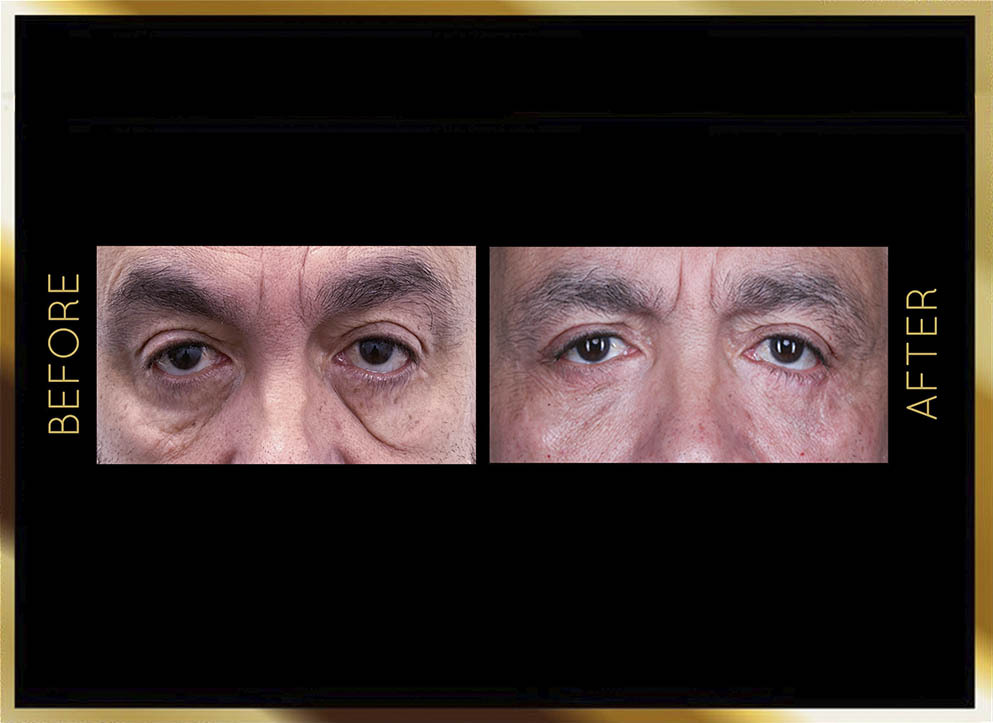
*results may vary

A pleasure to work with and consistently provides outstanding service.
What Is Blepharoplasty?
Blepharoplasty, commonly referred to as eyelid surgery, is a cosmetic or reconstructive procedure to improve drooping eyelids and remove excess skin around the eyes. It also addresses functional problems caused by sagging eyelid tissue.
During the procedure, unwanted skin, attached muscle, and sometimes fat from the eyelids are extracted or repositioned to lift and rejuvenate the eye area. It helps the eyes appear more rested and, in some cases, improves vision impaired by extra skin over the upper eyelids.
This surgery can be performed on the upper lids, lower lids, or both, depending on the patient’s needs and aesthetic goals. Upper eyelid blepharoplasty removes excess skin or fat from the upper eyelids, while lower eyelid blepharoplasty targets puffiness, bags, or sagging under the eyes.
For patients seeking correction after a previous eyelid procedure, revision blepharoplasty can help address concerns such as residual excess skin, asymmetry, or changes from an earlier surgery while restoring a balanced and natural appearance.
Blepharoplasty is an ideal way to open up the eyes and achieve a youthful, refreshed, and energetic appearance. Dr. David Shokrian evaluates brow alignment, eyelid skin, muscle tone, and the shape of your eye and develops a personalized treatment plan that delivers natural results.
Erase Years from Your Eyes with Blepharoplasty!
Clients’ Testimonials
This place was very good. The kindness and helpfulness of the staff was awesome. I loved Jess and my massages from Maribel..she was so good I wanted an 8 ounce bottle of milk and my bed after. Overall Dr. Shokrian was very honest in what he could do and what he couldn't which made my choice even easier.
Clients’ Testimonials
Sophia helped me tremendously if it wasn’t for her , I probably would have never gone through with my surgery! She made me feel so comfortable and like she genuinely cared for me ! I love my results so far and dr Shokrian is AMAZING with his work. I can finally say I’m happy and confident with myself. Thanks to everyone there but especially SOPHIA .
Clients’ Testimonials
If you are looking for a reliable place for a fresh start to look good and be comfortable in your skin. Millennial plastic surgery is the place! Im very pleased with my results! The staff is super professional and help you along your journey especially Barbara! Their midtown office is super clean and cute. Dr. Shokrian is an absolute genius and will have you looking right! I highly recommend this clinic and will definitely be back!
What Causes Droopy Eyelids?
Drooping of the upper eyelids, medically known as blepharoptosis, occurs when the upper eyelid falls lower than its normal position above the eye. This condition can affect one or both eyes.
Some individuals are born with this condition, while others may develop it later in life.
Acquired ptosis can result from a variety of factors, including:
- Aging or premature aging
- Weakness or detachment of the eyelid-lifting muscles
- Chronic eye rubbing
- Nerve-related issues
- Injury or trauma
- Previous eye surgery
As muscles lose their ability to lift the eyelid, it causes constant droopiness, which can interfere with vision, cause eye strain, or lead to headaches from constant brow elevation.
We can’t wait to meet you! We offer comprehensive consultations with Dr. Shokrian, and his team both virtually and in person.
212-421-7123Targeted Approaches: Types of Blepharoplasty We Offer
Because periorbital anatomy varies significantly from patient to patient, your surgical plan is entirely customized.
Depending on your aesthetic goals and medical needs, Dr. Shokrian may recommend:
- Upper Eyelid Surgery: Focuses on excising heavy, hooded skin and localized fat deposits from the upper lids. The incision is strategically concealed within the natural crease of the eye, making
- Lower Eyelid Surgery: Targets the structural fat pads that create permanent “bags” and puffiness below the eyes. The incision is typically made either just below the lash line or inside the
- Bilateral (Combined) Blepharoplasty: Addresses both the upper and lower eyelids in a single, comprehensive session. This approach takes approximately two to three hours and provides a complete rejuvenation of the ocular region.
- You have excess skin on the upper eyelids that creates a heavy or hooded appearance.
- You experience visual obstruction due to drooping skin.
- You feel uncomfortable with the extent of upper lid sagging.
- You have too many fatty deposits around both eyes.
- You have puffiness or under-eye bags that do not improve with rest.
- You feel your eyes make you look tired, sad, or older than you are or feel.
- You are in overall good health and do not have medical conditions that affect healing.
- You have practical and achievable expectations about what eyelid surgery can accomplish.
- Removes excess skin and herniated fat from the eyelids
- Refines the eyelid contours while preserving the natural crease and shape
- Creates a brighter, more open profile without changing your natural look
- Enhances overall facial attractiveness
- Does not change your facial expressions
- Delivers desired effects in one treatment
- Sagging of the eyebrows, which may require an eyebrow lift
- Discoloration under your eyes
- Crow’s feet at the corners of the eyes
- Eyelid structure and skin quality
- Brow position
- Muscle strength
- Degree of excess skin or fat
- Overall eye health
- Medical history
- Degree of vision obstruction – if it is a concern
- Detailed pre- and post-operative guidance on how to prepare for surgery and what to expect during recovery
- Ptosis (Drooping Eyelids): Weakened levator muscles or heavy skin that hangs over the upper eye, actively obstructing vision.
- Periorbital Fat Deposits: Stubborn under-eye bags that do not respond to sleep, diet, or topical treatments.
- Ectropion & Entropion: Structural conditions where the lower eyelid turns outward (exposing the eye to severe dryness and irritation) or inward (causing eyelashes to aggressively scrape the cornea).
- Lagophthalmos: A functional inability to close the eyelids completely, leaving the eye vulnerable to chronic damage.
- Facial Asymmetry: Uneven eyelid creases or shapes resulting from genetics, nerve issues, or previous trauma.
scarring virtually undetectable once healed. This 45-to-60-minute procedure is highly effective for clearing obstructed peripheral vision.
lower eyelid (transconjunctival) to extract or redistribute fat seamlessly.
Am I a Good Candidate for Eyelid Surgery?
Your desire to address an unattractive feature or obstruction is one of the most important factors in determining your eligibility for eyelid surgery.
You may be a good candidate for eyelid surgery if:
Dr. Shokrian will examine your eyelid structure, brow position, and overall eye health and ask detailed questions about your symptoms to determine if blepharoplasty is the most appropriate procedure for you. He recommends surgery only if he believes it will provide safe, satisfactory, and lasting results.
What Can I Expect From an Eyelid Lift Surgery?
As you grow old, the skin and muscles in the eyelids start to stretch and weaken, and extra folds of loose skin and pockets of fat collect above and below the eyes. This can sometimes impair your peripheral vision, making it harder to see to the sides or upward. Blepharoplasty is an effective solution for addressing these changes and restoring both function and appearance.
Benefits of Eyelid Lift Surgery:
Blepharoplasty can truly light up your face with clean, elegant results and a vibrant aura that lasts for years.
What blepharoplasty does not treat:
Understanding what blepharoplasty can and cannot treat helps you make informed decisions to achieve results that enhance your eyes naturally.
What to Expect During Your Eyelid Lift Consultation?
Your eyelid lift journey begins with a detailed consultation with one of our surgeons, Dr. Shokrian or Dr. Elfar.
In this session, they will assess your:
This consultancy is an opportunity for you to discuss your concerns, expectations, and what cosmetic and functional improvements you hope to achieve. Our surgeons will review the treatment options best suited to your needs and develop a personalized surgical plan tailored to your unique anatomy and goals.
In some cases, they may suggest combining a brow lift or ptosis repair with blepharoplasty to optimize correction and recovery results. At Millennial Plastic Surgery, we guide you every step of the way so you can feel confident in the choices you make about your appearance.
Conditions Treated with Eyelid Surgery
Eyelid surgery serves both profound cosmetic and functional purposes.
Our practice regularly treats:
What Happens During an Eyelid Lift Surgery?
An eyelid lift is typically performed as an outpatient procedure. It means you can return home the same day. Your medical team will provide you with all the details and instructions, so you are prepared for a successful procedure.
The surgery includes the following steps:
- You will be given local anesthesia with sedation or, in some cases, general anesthesia to ensure your safety and comfort throughout the surgery.
- For upper eyelid surgery, a small incision is made along the natural crease of the eyelid. For lower eyelid surgery, the incision is made just below the lash line or inside the lower eyelid, depending on your specific needs.
- Excess skin, muscle, and sometimes fat are carefully removed or repositioned to create a smooth contour while preserving natural eyelid function. Some tissue may also be transferred to surrounding areas to enhance visual appeal.
- The incisions are closed with fine sutures that are designed to minimize scarring.
The entire procedure typically takes one to two hours. After surgery, the surgeon will place protective gauze over your eyes. You will then be moved to the recovery room to rest for a short time. If general anesthesia was not used, you can leave once the medical team confirms that you have recovered from sedation and the procedure.
Preparing for Your Procedure
Patient safety and optimal aesthetic results require careful preoperative planning. Before your surgery at our New York facilities, we will conduct a thorough medical evaluation, which may include visual field testing and tear production assessments.
Pre-Surgical Protocols:
- Medication Adjustments: You must cease taking blood thinners, NSAIDs (like aspirin and ibuprofen), and certain herbal supplements to mitigate bleeding risks.
- Post-Operative Logistics: Eyelid surgery is an outpatient procedure. You must arrange for a responsible adult to drive you home and assist you for the first 24 to 48 hours.
- Recovery Environment: Prepare a recovery space equipped with cold compresses, prescribed lubricating eye ointments, and extra pillows to keep your head continuously elevated.
How Long Does It Take to Recover From Eyelid Surgery
Recovering from an eyelid surgery depends on several factors, including the extent of the procedure, whether you had upper, lower, or both eyelids treated, and your body’s natural healing process. Following your surgeon’s post-operative guidelines is crucial for safe, comfortable healing and timely recovery.
You will experience swelling, bruising, and mild discomfort in the first few days. They can be managed with the medications your surgeon has prescribed. You can return to light daily activities after 1 – 2 weeks, as most visible swelling and bruising begin to subside. If you feel comfortable, you can also return to work. Avoid straining your eyes, heavy lifting, or exposure to the sun during this early recovery period to ensure proper healing.
You may experience blurry vision, light sensitivity, watery eyes, or mild redness along the incision lines after surgery. These symptoms are temporary and usually improve with the prescribed medications.
Within 2 – 4 weeks, the majority of swelling resolves, and your eyes start to look more natural. You can gradually resume moderate activity, but it is important to continue protecting your eyes for smooth recovery. It will take a few months for your incisions to heal completely and the scars to fade before you see the final results.
Read more: Blepharoplasty Post-Operative Instructions
 56 West 45th Street, 4th floor
 New York, NY 10036 3190 Riverdale Ave. Level C #4A
Bronx, NY 10463 1000 Northern Blvd Suite 165
Great Neck, NY 11020

Highly recommend for their exceptional service and commitment to their clients.
Can Eyelid Surgery Be Combined With Other Procedures?
Eyelid surgery can be combined with other cosmetic or functional procedures to enhance overall facial harmony in a single session. Combining procedures is more cost-effective than returning later for a different one.
Treatments that complement eyelid surgery include:
- Face lift – It smooths the folds of skin on the cheeks and jawline, rejuvenating the lower and mid-face.
- Forehead and brow lift – It enhances the upper eye area by tightening the sagging forehead and raising the eyebrows.
- Dermal fillers – Gel-like substances are injected beneath the skin to soften lines and restore volume around the eyes.
- Laser resurfacing or chemical peels – They improve fine lines, texture, and skin tone around the eyes.
Dr. David Shokrian carefully assesses your eyelid health and facial features to create a treatment plan tailored to address your unique cosmetic, functional, and medical needs successfully.
Refresh Your Eyes & Lift Your Confidence with Eyelid Surgery
How Much Does a Standard Eyelid Surgery Cost?
The cost of an eyelid surgery varies according to your profile and desired outcome.
Several aspects or conditions can influence the final price, including:
- Experience and expertise of the surgeon
- Whether the procedure is performed on upper eyelids, lower eyelids, or both
- The type of anesthesia used
- Complexity of the surgery
- Additional procedure cost
- Your medical history
- Facility fee
- Pre and post-operative care
- Follow-up visits
- Geographical location
Your specific circumstances, the extent of eyelid drooping, and your individual goals, all play a crucial role in determining the cost of your surgery. An in-person consultation with your surgeon is the only way to receive an accurate and personalized estimate for your procedure.
Eyelid Surgery Covered by Insurance
Eyelid surgery may be covered by insurance when performed for medical reasons, such as vision obstruction caused by excess eyelid skin. Medical documentation and visual field testing are required, and eligibility depends on the specific terms of your insurance plan.
Millennial Plastic Surgery partners with major commercial insurance providers and has successfully helped patients obtain coverage for qualifying eyelid surgery procedures. While coverage varies by plan, our team assists with insurance verification, authorization, prior authorization, and submission of required documentation whenever possible.
We commonly work with the following insurance providers:
- NYSHIP
- Aetna
- 1199
- UnitedHealthcare (UHC)
- Anthem Blue Cross
- Empire Blue Cross Blue Shield
- EmblemHealth (GHI)
- Cigna
- BlueCross BlueShield
- UFT (United Federation of Teachers)
If your insurance provider is not listed, please call our office. Our staff will help you check your eligibility and review your coverage options at no cost. Remember, coverage varies depending on your plan.
If you seek eyelid surgery for cosmetic purposes only, you will generally be responsible for the full cost of the procedure, as insurance typically does not cover elective or aesthetic treatments.
We realize that paying for an eyelid lift out of pocket can be difficult. To help you achieve beautiful, more awake-looking eyes, we offer flexible payment plans and third-party financing options that make the surgery more affordable for you.
Schedule a free consultation with our experienced surgeons to explore your options and begin your journey to brighter, more youthful eyes and a refreshing appearance.
Expert eye care & artistic solutions are now closer than ever – visit our offices in Manhattan, the Bronx, and Long Island, NYC!
Author: Dr. David Shokrian